
The Common Beech
The Common beech (Fagus sylvatica) is one of the most iconic trees, particularly in the south of the UK. It is a common feature in the Somerset landscape and is currently under threat as a result of climate change.
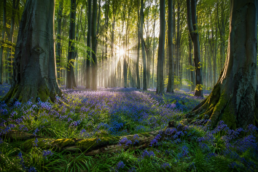
The Common beech is considered one of Europe’s most ecologically and economically valuable tree species, providing vital habitat for wildlife and contributing significantly to both the water and carbon cycles. It is one of the largest trees in Britain and can reach heights of up to 130ft, earning it the title of the ‘Queen of the Trees’. In Hagg Wood, Derbyshire, a beech tree measured 45m in 2018 and is believed to be the tallest native tree in England.
Reduced rainfall and higher temperatures predicted over the next 70 years could create conditions that limit beech tree growth by 20 to 30% in central Europe. In southern Europe, losses could exceed 50%*. Such declines are considered indicators of future dieback and signal the potential loss of vast areas of forest across the continent. Conversely, mountainous regions may become increasingly suitable for beech, potentially leading to an expansion of planting in these areas.
The main climate change impacts anticipated for beech include drier and warmer summers, particularly in southern, central and eastern England, leading to more severe soil moisture deficits and reduced tree growth. Changes in rainfall patterns are also expected, with wetter autumn and winter periods causing greater fluctuations in water tables. This can restrict root depth, reduce tree stability and increase the risk of windthrow.
Warmer winters are likely to increase both the incidence and severity of tree diseases and pest outbreaks, allowing pests and pathogens to expand their geographic range. Alongside this, the heightened risk of fire associated with hotter and drier summers presents an additional threat to woodland ecosystems.
It is therefore likely that beech will become less common in Somerset over time. As species suitability changes, woodland management will need to focus on increasing habitat resilience. Lesser-known species, including those from regions with climates similar to those projected for southern England, may become more prevalent due to their greater adaptability to warmer and drier conditions. Consequently, species selection will need to be carefully matched to site-specific conditions.
These principles are increasingly being applied in forest management, with vulnerable sites identified as priorities for intervention. As Landscape Architects, it is imperative that the selection of tree and shrub species is informed by long-term climatic predictions rather than simply responding to existing baseline conditions.
Young and newly established trees, together with street trees and hedgerow trees, are likely to be among the first affected by climate change. Ancient and native woodlands will also experience significant impacts, with changing species composition and shifts in distribution. Beech, in particular, is expected to become more prevalent in the north and west of England.
Changes are also anticipated within vegetation community structures due to altered plant competition. Factors influencing these changes include increased leaf area, earlier leaf emergence, shifting growing season temperatures and drier soil conditions. The age structure of tree stands may also be affected by more frequent natural disturbance events, while heavily visited woodlands could face a greater risk of fire damage.
Landscape management will need to be adaptive and tailored to individual sites. Measures may include increasing tree species diversity, enhancing monitoring and intervention where appropriate, and selecting planting stock originating from locations up to two degrees latitude south of the planting site. A small proportion of stock from up to five degrees south may also be appropriate in mixed provenance planting where species have low frost sensitivity.
Additional management measures include enhanced pest and disease monitoring, increased thinning to reduce moisture demand in open stands, greater species diversity, improved public awareness and vigilance, and the development of contingency plans supported by regular fire-response training.
When managing ancient woodland or creating new native woodland, it is important to understand local climate change pressures and the limitations they place on component species such as beech, a dominant species within Somerset’s woodlands. Woodland planting strategies should incorporate an element of non-local native material to improve resilience to future climate conditions.
In new native woodlands, introducing a small proportion of species from hotter and drier regions of continental Europe may further enhance long-term resilience. However, species selection should be based on regions that currently experience conditions similar to those projected for England in the future. Careful consideration must also be given to potential impacts on native biodiversity, including competition and invasiveness.
At least 80% of woodland planting should remain native, although a small proportion of carefully selected non-native species may provide benefits where they are well suited to site conditions and present no invasive threat. Long-term woodland management will continue to rely on natural regeneration and evolutionary adaptation.
The expansion of invasive flora and fauna is likely as warming climates allow species to extend their ranges and increase population sizes. Coppicing and traditional woodland management techniques can improve drought resilience because established stools possess deeper root systems than regenerating seedlings or newly planted stock. Expanding areas of ancient woodland pasture and parkland can also support the dispersal of many woodland species.
It is essential that long-term changes within woodlands are monitored, recorded and reviewed regularly. Extending existing woodland areas and improving connections with semi-natural habitats can help strengthen resilience. Hedgerows and shelterbelts can facilitate species movement across agricultural landscapes, while widening riparian corridors and other linear semi-natural features can help reduce habitat fragmentation.
Larger and less fragmented woodland areas are generally more robust in the face of environmental pressures. Well-connected woodland networks will provide opportunities for native flora and fauna to migrate and adapt as climate change continues to progress.
Beyond anticipated changes in species composition, woodland planting also plays an important role in combating climate change. For example, woodland established in valley bottoms prone to flooding can help attenuate peak flows downstream, reducing flood risk in towns and cities. Trees also remove carbon dioxide from the atmosphere and store carbon within woody biomass.
Wood products can further contribute to climate mitigation by providing alternatives to materials whose production generates significant greenhouse gas emissions.
Planting woodland within urban environments can deliver a range of additional benefits, including reduced stress, improved wellbeing, lower noise levels, reduced air pollution, increased shelter and an enhanced visual environment.
Planning proactively for change within our landscapes will deliver the greatest long-term benefits, helping to ensure that our woodlands remain resilient, healthy and capable of adapting to future climatic conditions.
Written by

References
Europe’s beech forests threatened by climate change (europa.eu)
Martinez del Castillo, E., Zang, C.S., Buras, A. et al. (2022) Climate-change-driven growth decline of European beech forests. Communications Biology, 5, 163.
Climate change: impacts and adaptation in England’s woodlands (Forest Research)
Adapting Forest and Woodland Management to the Changing Climate, UK Forestry Standard Practice Guide (2022).