
From Classroom to Practice
Jobe Meechan
Learning Through Experience
Real learning comes from experience, not just from training or formal assessments and that belief has shaped many of the decisions I’ve made on my journey into architecture. Choosing the apprenticeship route felt like choosing a way of learning that made sense to me: learning through doing, through observing, and through being part of real projects from the very beginning. Unlike the traditional full‑time university pathway, an apprenticeship offers the chance to earn while learning, but more importantly, it offers continuous exposure to the profession. Being involved with clients, deadlines, and real design challenges has allowed me to understand architecture in a much more practical and grounded way.
My interest in architecture developed gradually rather than all at once. It first started to take shape during secondary school when I completed a Level 2 qualification in Construction and the Built Environment. Every Friday afternoon I would leave school to study at Yeovil College, and this was the first time a subject truly captured my attention. Learning about buildings, drawing floor plans, and analysing case studies helped me see how carefully the built environment is designed. Those early experiences made architecture feel like a real and exciting possibility.
Later, when I moved on to study Graphic Design & Photography at Level 3, architecture resurfaced in unexpected ways. I found myself drawn to photographing buildings, exploring form and structure, and experimenting with 3D design. Over time, my portfolio naturally became more focused on architectural themes. This growing interest led to a significant opportunity: work experience at Boon Brown in 2023. Spending time inside an architectural practice gave me insight into the collaborative processes, problem‑solving, and creativity involved in the profession. It was an experience that made the pathway ahead feel much clearer.

Moving Toward the Apprenticeship Route
As college came to an end, I faced the familiar uncertainty of deciding what to do next. With support from Boon Brown, I applied for the Level 6 Architectural Apprenticeship at Portsmouth University. Although I didn’t meet the standard grade requirements, my portfolio and application demonstrated my direction and commitment. Being accepted was a reminder that there are multiple routes into architecture, and that experience and passion can carry weight alongside academics.
The structure of the apprenticeship suits the way I naturally learn. Splitting time between university and working in practice gives everything context — what I learn in lectures becomes easier to understand and apply when I’m back in the studio the next day. The apprenticeship still leads to the same ARB and RIBA milestones, but the ongoing practical experience brings each stage of learning to life.
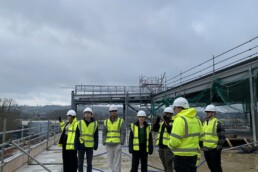
I am also required to log and submit off‑the‑job hours each month, which records the new skills and knowledge I’ve gained. Apprentices must complete a minimum number of these hours over the duration of the course. For example, my programme requires at least 1,029 hours across four years. Most of these hours come from time spent at university, but they are also supplemented by structured learning in the workplace. This can include anything from attending larger meetings, joining site visits, learning new software, or receiving short talks on topics such as building regulations, the planning process, or the technical side of how something works. Keeping track of these hours encourages me to stay aware of my progress and ensures that my development continues alongside my day‑to‑day responsibilities.
The financial aspect is also a significant benefit. Not having to pay tuition fees removes a major source of financial pressure, and being able to continue living at home keeps me close to my support network. This allowed me to move into the profession without needing to relocate or take on additional financial burdens, something that made the route feel more manageable and realistic.
Of course, the pathway comes with challenges. Studying from a distance means missing out on the traditional university experience and balancing full‑time work with academic deadlines can be demanding. There are times when managing both feels overwhelming, and I’ve had to develop new habits, routines, and study techniques to stay on top of everything. Some weeks require more adjustment than others, but each challenge has helped build resilience and confidence in handling responsibilities.
Looking Ahead
Looking back over my journey so far, the apprenticeship route has offered more than just a qualification. It has provided steady professional development, meaningful experience, and a clearer understanding of the realities of architectural practice. Working on real projects, contributing to live design work, and learning from experienced colleagues has made the learning process richer and more connected to the industry. Although there are difficulties along the way, the benefits continue to outweigh them. This journey is still in its early stages, but it’s one I feel encouraged by, and I look forward to seeing how it continues to unfold.
Written by