

BoonBrown has incorporated The Landscape Practice
Landscape Team
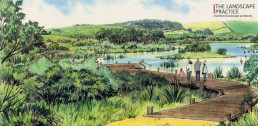
BoonBrown are delighted to announce that we have recently incorporated The Landscape Practice as part of our continuing diversification. The Landscape Practice are an award-winning design studio and have produced some fantastic work over the past 35 years, we share the same values of enhancing and protecting our environment and improving life around us for all to experience and enjoy.
We are extremely excited to carry on The Landscape Practice’s legacy and we wish Philip Hanson all of the best with his retirement. We have a lot of opportunities ahead of us and as a team we are thrilled to be working on some fantastic new schemes.
Details
For any new or historic enquiries, please get in touch with our Director of Landscape Architecture, Oliver Clark, to discuss how BoonBrown can support your project.
Email
oliver.clark@boonbrown.com
Telephone
01935 420 803

Reflections from Chelsea
Landscape Team
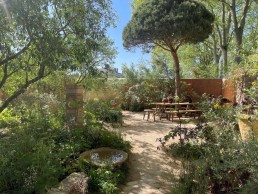
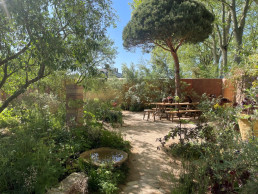
Moving towards a more sustainable way of planting, reflections from Chelsea.
One of the key themes from the Chelsea Flower show this year was the use of different substrates as a means for planting the show gardens. With peat-free planting mediums becoming more and more prevalent and sought-after in the landscape industry, it was interesting to see the different options on show and how these performed in the eyes of the Chelsea judges. Showing how these substrates can perform at the very highest level expands the options available for use in the landscape profession and for those at home and helps reduce the impact the planting industry has on the environment. Some key benefits to using this kind of substrate are:
- Improved drainage: Rubble and free-draining substrate allow excess water to quickly drain away from plant roots. This helps prevent waterlogging and reduces the risk of root rot or other water-related issues. Good drainage promotes healthier root growth and reduces the likelihood of plant diseases.
- Enhanced aeration: The presence of rubble and free-draining substrate allows for better airflow to plant roots. Oxygen is vital for root respiration and overall plant health. Improved aeration facilitates nutrient uptake and supports the growth and development of plants.
- Reduced soil compaction: In urban areas or places with compacted soil, rubble and free-draining substrate can help alleviate soil compaction. Compacted soil limits root growth and reduces the movement of air and water within the soil. Planting in rubble creates air pockets and open spaces, promoting root penetration and healthier root systems.
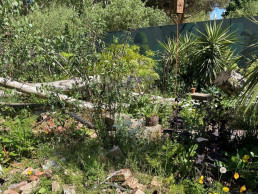

- Utilization of urban spaces: Planting in rubble and free-draining substrate enables the use of spaces that would otherwise be unsuitable for traditional planting methods. Urban areas often lack adequate soil for planting, but rubble and free-draining substrates can create viable growing environments in spaces such as vacant lots, rooftops, or urban gardens.
- Erosion control: Rubble and free-draining substrate can be used to stabilize slopes or areas prone to erosion. The materials can help retain soil and prevent the loss of topsoil during heavy rains or wind. By establishing vegetation in these areas, plants with deep root systems can anchor the soil, minimizing erosion risks.
- Aesthetically pleasing landscapes: When appropriately designed and maintained, rubble-based planting systems can create visually appealing landscapes. By integrating plants into urban environments, these methods can soften the appearance of concrete and other artificial elements, improving the overall aesthetics and creating a more pleasant environment for residents and visitors.
- Biodiversity promotion: Planting in rubble and free-draining substrate can contribute to urban biodiversity. These unconventional planting methods can support the growth of a wide range of plant species, including those that are well-adapted to arid or challenging conditions. By increasing plant diversity, it can attract pollinators, birds, and other wildlife, enhancing the overall ecological value of the area.
- Weed-control: The use of sterile mulches have in recent years been promoted by the likes of Nigel Dunnett. Such sterile mulches as gravel and weed-free green compost provide a non-chemical approach to establishing planting with minimum competition from weeds. It helps to establish the plants within a clean environment, plants are able to get their roots down into the soil beneath, but weed seeds or vegetative fragments in the underlying soil will be prevented from pushing up through the mulch.
- Seasonal benefits: Planting directly into sand protects roots and plants in the winter, whilst also helping to reduce moisture leaving the soil in the intense heat of the summer, acting as a mulch.
It’s worth noting that the success of planting in rubble and free-draining substrate depends on factors such as plant selection, appropriate watering, nutrient management, and ongoing maintenance. Additionally, site-specific conditions and local regulations should be considered when implementing such planting methods.
BoonBrown appointed on Chelsea Embankment Gardens
Landscape Team
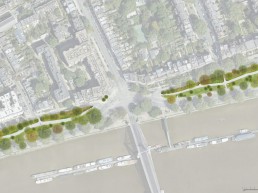
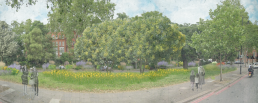
BoonBrown Landscape Architects are extremely excited to be working alongside the Royal Borough of Kensington and Chelsea, the Chelsea Steering Group and Chelsea Physic Garden to develop and enhance the Chelsea Embankment Gardens.
Our vision for the gardens centres around visually uniting the two spaces, through the use of repetition in planting types between the sites, using naturalistic, drought-tolerant planting – creating a strong design language between the gardens. Swathes of bulbs and informal blocks of planting, alongside multi-stemmed ornamental trees will provide visual screening, whilst enlivening the spaces with colour and seasonal interest.
We have aspirations to obtain funding to restore the Dante Gabriel Rossetti fountain back to its former glory as a working drinking fountain and as a bid to cut the use of single-use plastics – encouraging people to fill up their bottles at the fountain. Further enhancements to the statues within the gardens will include the provision of formal yew hedging as a framing device and as a nod to historic Tudor parterres, whilst solar-powered up-lighting will also serve to enhance their setting.
As an homage to Elizabeth I, a black mulberry tree will be planted within the gardens, as an historical link to the mulberry trees said to have been planted by Queen Elizabeth I at King Henry VIII’s Manor House (now occupied by No.s 19-26 Cheyne Walk). In honour of the late Queen Elizabeth II, a tulip tree will also be planted in her memory.
Planting beds are to undergo arboricultural works to enhance the health and longevity of existing tree stock, whilst infill woodland planting will break up the current gaps in planting, injecting colour, structure and seasonal interest within the existing beds. Our team of Chartered Landscape Architects have chosen plant species for their ornamental qualities, drought-tolerance and biodiversity value, with input and guidance from Chelsea Physic Garden. Further ecological measures will be introduced in the form of ornate ‘bug hotels’, the design of which is to be guided through the input of local school children and will provide a mini nature trail within the gardens. With ecological guidance, potential locations for bat and bird boxes will also be explored.
BoonBrown Landscape Architects are looking forward to bringing the design ideas to fruition, reinvigorating the gardens and injecting much needed colour and life back into the gardens for the benefit of local people and visitors to this beautiful spot.