
The Common Beech
Landscape
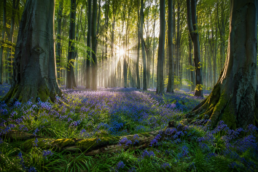
The Common beech (Fagus sylvatica) is one of the most iconic trees, particularly in the south of the UK. It is a common feature in the Somerset landscape and is currently under threat as a result of climate change.
The Common beech is considered one of Europe’s most ecologically and economically valuable tree species, providing vital habitat for wildlife and contributing significantly to both the water and carbon cycles. It is one of the largest trees in Britain and can reach heights of up to 130ft, earning it the title of the ‘Queen of the Trees’. In Hagg Wood, Derbyshire, a beech tree measured 45m in 2018 and is believed to be the tallest native tree in England.
Reduced rainfall and higher temperatures predicted over the next 70 years could create conditions that limit beech tree growth by 20 to 30% in central Europe. In southern Europe, losses could exceed 50%*. Such declines are considered indicators of future dieback and signal the potential loss of vast areas of forest across the continent. Conversely, mountainous regions may become increasingly suitable for beech, potentially leading to an expansion of planting in these areas.
The main climate change impacts anticipated for beech include drier and warmer summers, particularly in southern, central and eastern England, leading to more severe soil moisture deficits and reduced tree growth. Changes in rainfall patterns are also expected, with wetter autumn and winter periods causing greater fluctuations in water tables. This can restrict root depth, reduce tree stability and increase the risk of windthrow.
Warmer winters are likely to increase both the incidence and severity of tree diseases and pest outbreaks, allowing pests and pathogens to expand their geographic range. Alongside this, the heightened risk of fire associated with hotter and drier summers presents an additional threat to woodland ecosystems.
It is therefore likely that beech will become less common in Somerset over time. As species suitability changes, woodland management will need to focus on increasing habitat resilience. Lesser-known species, including those from regions with climates similar to those projected for southern England, may become more prevalent due to their greater adaptability to warmer and drier conditions. Consequently, species selection will need to be carefully matched to site-specific conditions.
These principles are increasingly being applied in forest management, with vulnerable sites identified as priorities for intervention. As Landscape Architects, it is imperative that the selection of tree and shrub species is informed by long-term climatic predictions rather than simply responding to existing baseline conditions.
Young and newly established trees, together with street trees and hedgerow trees, are likely to be among the first affected by climate change. Ancient and native woodlands will also experience significant impacts, with changing species composition and shifts in distribution. Beech, in particular, is expected to become more prevalent in the north and west of England.
Changes are also anticipated within vegetation community structures due to altered plant competition. Factors influencing these changes include increased leaf area, earlier leaf emergence, shifting growing season temperatures and drier soil conditions. The age structure of tree stands may also be affected by more frequent natural disturbance events, while heavily visited woodlands could face a greater risk of fire damage.
Landscape management will need to be adaptive and tailored to individual sites. Measures may include increasing tree species diversity, enhancing monitoring and intervention where appropriate, and selecting planting stock originating from locations up to two degrees latitude south of the planting site. A small proportion of stock from up to five degrees south may also be appropriate in mixed provenance planting where species have low frost sensitivity.
Additional management measures include enhanced pest and disease monitoring, increased thinning to reduce moisture demand in open stands, greater species diversity, improved public awareness and vigilance, and the development of contingency plans supported by regular fire-response training.
When managing ancient woodland or creating new native woodland, it is important to understand local climate change pressures and the limitations they place on component species such as beech, a dominant species within Somerset’s woodlands. Woodland planting strategies should incorporate an element of non-local native material to improve resilience to future climate conditions.
In new native woodlands, introducing a small proportion of species from hotter and drier regions of continental Europe may further enhance long-term resilience. However, species selection should be based on regions that currently experience conditions similar to those projected for England in the future. Careful consideration must also be given to potential impacts on native biodiversity, including competition and invasiveness.
At least 80% of woodland planting should remain native, although a small proportion of carefully selected non-native species may provide benefits where they are well suited to site conditions and present no invasive threat. Long-term woodland management will continue to rely on natural regeneration and evolutionary adaptation.
The expansion of invasive flora and fauna is likely as warming climates allow species to extend their ranges and increase population sizes. Coppicing and traditional woodland management techniques can improve drought resilience because established stools possess deeper root systems than regenerating seedlings or newly planted stock. Expanding areas of ancient woodland pasture and parkland can also support the dispersal of many woodland species.
It is essential that long-term changes within woodlands are monitored, recorded and reviewed regularly. Extending existing woodland areas and improving connections with semi-natural habitats can help strengthen resilience. Hedgerows and shelterbelts can facilitate species movement across agricultural landscapes, while widening riparian corridors and other linear semi-natural features can help reduce habitat fragmentation.
Larger and less fragmented woodland areas are generally more robust in the face of environmental pressures. Well-connected woodland networks will provide opportunities for native flora and fauna to migrate and adapt as climate change continues to progress.
Beyond anticipated changes in species composition, woodland planting also plays an important role in combating climate change. For example, woodland established in valley bottoms prone to flooding can help attenuate peak flows downstream, reducing flood risk in towns and cities. Trees also remove carbon dioxide from the atmosphere and store carbon within woody biomass.
Wood products can further contribute to climate mitigation by providing alternatives to materials whose production generates significant greenhouse gas emissions.
Planting woodland within urban environments can deliver a range of additional benefits, including reduced stress, improved wellbeing, lower noise levels, reduced air pollution, increased shelter and an enhanced visual environment.
Planning proactively for change within our landscapes will deliver the greatest long-term benefits, helping to ensure that our woodlands remain resilient, healthy and capable of adapting to future climatic conditions.
Written by

References
Europe’s beech forests threatened by climate change (europa.eu)
Martinez del Castillo, E., Zang, C.S., Buras, A. et al. (2022) Climate-change-driven growth decline of European beech forests. Communications Biology, 5, 163.
Climate change: impacts and adaptation in England’s woodlands (Forest Research)
Adapting Forest and Woodland Management to the Changing Climate, UK Forestry Standard Practice Guide (2022).
Reflections from Chelsea
Landscape
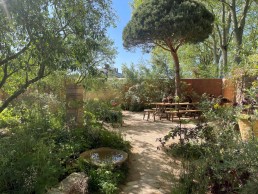
Moving towards a more sustainable way of planting, reflections from Chelsea.
One of the key themes from the Chelsea Flower show this year was the use of different substrates as a means for planting the show gardens. With peat-free planting mediums becoming more and more prevalent and sought-after in the landscape industry, it was interesting to see the different options on show and how these performed in the eyes of the Chelsea judges. Showing how these substrates can perform at the very highest level expands the options available for use in the landscape profession and for those at home and helps reduce the impact the planting industry has on the environment. Some key benefits to using this kind of substrate are:
- Improved drainage: Rubble and free-draining substrate allow excess water to quickly drain away from plant roots. This helps prevent waterlogging and reduces the risk of root rot or other water-related issues. Good drainage promotes healthier root growth and reduces the likelihood of plant diseases.
- Enhanced aeration: The presence of rubble and free-draining substrate allows for better airflow to plant roots. Oxygen is vital for root respiration and overall plant health. Improved aeration facilitates nutrient uptake and supports the growth and development of plants.
- Reduced soil compaction: In urban areas or places with compacted soil, rubble and free-draining substrate can help alleviate soil compaction. Compacted soil limits root growth and reduces the movement of air and water within the soil. Planting in rubble creates air pockets and open spaces, promoting root penetration and healthier root systems.
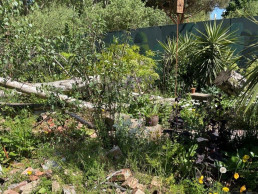

- Utilization of urban spaces: Planting in rubble and free-draining substrate enables the use of spaces that would otherwise be unsuitable for traditional planting methods. Urban areas often lack adequate soil for planting, but rubble and free-draining substrates can create viable growing environments in spaces such as vacant lots, rooftops, or urban gardens.
- Erosion control: Rubble and free-draining substrate can be used to stabilize slopes or areas prone to erosion. The materials can help retain soil and prevent the loss of topsoil during heavy rains or wind. By establishing vegetation in these areas, plants with deep root systems can anchor the soil, minimizing erosion risks.
- Aesthetically pleasing landscapes: When appropriately designed and maintained, rubble-based planting systems can create visually appealing landscapes. By integrating plants into urban environments, these methods can soften the appearance of concrete and other artificial elements, improving the overall aesthetics and creating a more pleasant environment for residents and visitors.
- Biodiversity promotion: Planting in rubble and free-draining substrate can contribute to urban biodiversity. These unconventional planting methods can support the growth of a wide range of plant species, including those that are well-adapted to arid or challenging conditions. By increasing plant diversity, it can attract pollinators, birds, and other wildlife, enhancing the overall ecological value of the area.
- Weed-control: The use of sterile mulches have in recent years been promoted by the likes of Nigel Dunnett. Such sterile mulches as gravel and weed-free green compost provide a non-chemical approach to establishing planting with minimum competition from weeds. It helps to establish the plants within a clean environment, plants are able to get their roots down into the soil beneath, but weed seeds or vegetative fragments in the underlying soil will be prevented from pushing up through the mulch.
- Seasonal benefits: Planting directly into sand protects roots and plants in the winter, whilst also helping to reduce moisture leaving the soil in the intense heat of the summer, acting as a mulch.
It’s worth noting that the success of planting in rubble and free-draining substrate depends on factors such as plant selection, appropriate watering, nutrient management, and ongoing maintenance. Additionally, site-specific conditions and local regulations should be considered when implementing such planting methods.

The Insect Crisis
Landscape
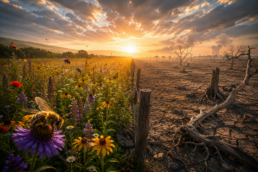
It is Mother’s Day 2022, my husband is renowned for the selection of novel presents, and so I begin to carefully unwrap my gift, only to be greeted by the title ‘The Insect Crisis’ – slightly shocked by this year’s unusual present, I decided to give it a read, during those fleeting moments of toddler sleep, I found myself sucked into a disorientating (particularly considering the events of recent years), increasingly apocalyptic description of the world we currently inhabit.
The prologue is gripping and deeply depressing in equal measures, describing a lifeless world, devoid of colour, birds starving to extinction, in fact all manner of fauna and flora unable to co-exist – the world is painted as one of putridity – beetles absent, unable to breakdown decaying matter – millions of acres of land laid to waste. Descriptions of food supplies disintegrating – a third of global food production dependent upon pollination from not only the bees, but flies, moths, wasps and beetles. Common food items, such as apples, honey and coffee become scarce and expensive commodities. Strawberries, plums, peaches, melons and broccoli no longer able to be obtained, with remaining vegetables oddly-shaped and pathetically shrivelled. Starvation averted by a main stay of wind-pollinated wheat, rice and maize – beige plates now an order of the day.
As anyone who frequents my desk will know, the next description fills me with much alarm, in the absence of the pollinators of the cacao tree – chocolate supplies are now cut off! My attempt at lightening the mood, is met by descriptions of the slow starvation of the human race – once entire ecosystems collapse – this serves to accelerate said process.
The prologue ends as follows ‘Wild meadows vanished, followed eventually by tropical rainforests… Cascades of extinctions rippled through our denuded planet. For those of us left, the misery was finally complete’.
I am only three pages in at this point, and I am desperate to find answers. As a Landscape Architect, we seek to improve the natural environment, I am keen to learn more to inform my work and to help mitigate, prevent such a hellish existence from taking place. Biologist E.O. Wilson writes ‘Within a few decades the world would return to the state of a billion years ago, composed primarily of bacteria, algae and a few very simple multicellular plants’. There have been five mass extinctions in the past 400 million years, of which insects have survived all of these. Have we done so much damage since the industrial revolution, that now even the insects are in trouble?
In recent years, the Entomological world has pointed to major declines in the abundance and species diversity of insects around the world – often seemingly without cause. In 1970, Brad Lister, an Ecologist travelled to Puerto Rico to document its insects, rudimentary ‘sticky traps’ were set up – plates smeared with a sticky compound and distributed on the forest floor. By sunset, the plates were a blackened mass of insects – ready to be picked off, dried and weighed. Thirty-five years later, following up his work – the same experiment produced a handful of specimens. This happened day, after day – their results showed that 98% of insects by biomass had gone.
Similar studies from around the world echoed the same findings, such as ‘the total mass of the world’s insects receding at a breakneck speed of 2.5 percent a year’.
I think it is fair to say that we are all aware of the plight of the honeybees – who have become the poster child for insect decline in the public consciousness. Furthermore, in the United States, the abundance of four species of bumblebee has plummeted by as much as 96% in recent decades. Well-meaning budding beekeepers may be causing more harm than good, with poorly-managed honeybee hives being ‘little ecosystems of plagues and contagions’ according to Jane Memmott an Ecologist at Bristol University. By bringing in honeybees – bumblebees and solitary bees may inadvertently be starved due to the land required to sustain said honeybees. Honeybees require 45 kilograms of honey to get each colony through a year and it takes 2 million flowers to make half a kilogram of honey.
In 2019, scientists at the University of York, found that Moths, also important pollinators, are dropping in abundance by 10% each decade in Britain. British butterfly numbers have nearly halved in the past fifty years, whilst ‘more than twenty species of bees and flower-visiting wasps have completely vanished from the United Kingdom since the Victorian era’. The causes of said declines, almost certainly include habitat loss, exposure to pesticides and climate change.
Insects have long been seen in negative terms, as pests, as ‘creepy crawlies’. The often maligned wasp, has long been seen as a source of potential pain, a US study showed that wasps can grasp ‘transitive inference’ e.g. if A is greater than B and B is greater than C, then A must be greater than C. Sorting of insects into ‘good’ and ‘bad’ is therefore an unhelpful approach in understanding these complex creatures.
Aside from pollination and propping up the ecosystems of this planet (!) – insects and their derivatives have also been used for medicinal purposes for Millenia. Modern science is currently tapping into the great potential that insects hold in fighting diseases and antibiotic-resistance.
The UK is now considered to be one of the least wooded countries in Europe. Agricultural land now makes up nearly 3/4s of land cover. The drive for agricultural efficiency and techniques of modern farming have led to larger fields, half of all hedgerows have disappeared (key habitats for pollinators and insect predators of crop pests). Vital chalk grassland habitats have declined by 80%. A three-crop rule introduced by the EU, means that for much of the year, there is no crop growing at all, just barren soil – leading to the starvation of bees and other insects.
In the ‘Accidental Countryside’ Steven Moss argued that ‘modern agriculture would provide a better home for insects if it was bulldozed and replaced with houses and their gardens’. Britain’s gardens are often invariably more diverse than most arable fields.
Insects have also been devastated by the use of pesticides, the likes of Glyphosate, a commonly used poison that is regarded as a likely carcinogen – is currently being banned or in the process of being banned by a number of countries across the globe. Perhaps, most potent of all are unsurprisingly, the insecticides. The now banned DDT has been eclipsed by the current use of neonicotinoids, which has been calculated to be 7,000 times more toxic to bees than DDT. Dave Goulson claims ‘a single teaspoon of imidacloprid is enough to kill as many honeybees as there are people in India’.
I have summarised a small section of the 260 pages of this fear-inducing and eye-opening book, what can we now do, it is important that certain chemicals are restricted and sufficient, joined up land (even at the margins) be given over for insects to repopulate.
Examples of rewilding projects such as at Knepp – a system of nature-based farm management – allowing the tools of nature to reinvigorate the landscape to become a more common occurrence. Wildlife corridors are imperative, especially in relation to climate change. Buglife, have modelled ‘B-Lines’ a grand ambition for 3,000 miles of insect corridors comprising wildflower habitats.
In urban environments, green and brown roofs are showing great promise in supporting insect life, with some reports demonstrating greater levels of biodiversity than the brownfield sites which they are replacing. Ensuring that more space is given over to ‘green infrastructure’ – creating valuable, connected habitats in both rural and urban contexts.
At a domestic level, reducing the number of times we mow or weed our lawns or use outdoor lighting can help, as well as a reduction in the use of chemicals in a garden setting.
The insect crisis, is really a human emergency, and it is important that we act now, globally.
Written by