Where Learning meets Practice
Placement

A previous 4 weeks work experience at BoonBrown gave me confidence that, as a second year student currently studying my Part 1 at the University of Bath, I would be given interesting and consequential projects to work on in a supportive and knowledgeable environment. From the start I was made to feel like a valuable member of the team and quickly integrated into the office culture. I was exposed to multiple stages of the RIBA Plan of work, from technical design and coordination to preparing design and access statements. Most of my time at BoonBrown was spent creating technical drawing packages for Stage 4 of the RIBA Plan of Work, this filled a gap in my knowledge that would otherwise not be filled by University. I was able to interact with clients and contractors, giving me an insight into how projects get coordinated and how teams work together to progress a project.
My colleagues at BoonBrown always provided valuable insight into where the best place to look for the information required is instead of telling me the answer, this independence increased my confidence in making my own decisions that were properly informed. I always felt engaged in the tasks I was given and within that the freedom to execute it the way I wanted. My responsibility as time went on grew and I was able to produce high quality work that carried with it a feeling of pride.
Due to my time at BoonBrown, it has become clear to me that my primary interest in architecture is how responsible and sustainable design intercepts the concept of mass housing. This has been most valuable to me as it has brought into focus what principles I value in design and architecture.
I want to thank all of the team at BoonBrown for a well rounded experience and giving me the confidence to return to university in September fully sure that architecture is the career path that I want to pursue.
Written by


From Classroom to Practice
Placement
Learning Through Experience
Real learning comes from experience, not just from training or formal assessments and that belief has shaped many of the decisions I’ve made on my journey into architecture. Choosing the apprenticeship route felt like choosing a way of learning that made sense to me: learning through doing, through observing, and through being part of real projects from the very beginning. Unlike the traditional full‑time university pathway, an apprenticeship offers the chance to earn while learning, but more importantly, it offers continuous exposure to the profession. Being involved with clients, deadlines, and real design challenges has allowed me to understand architecture in a much more practical and grounded way.
My interest in architecture developed gradually rather than all at once. It first started to take shape during secondary school when I completed a Level 2 qualification in Construction and the Built Environment. Every Friday afternoon I would leave school to study at Yeovil College, and this was the first time a subject truly captured my attention. Learning about buildings, drawing floor plans, and analysing case studies helped me see how carefully the built environment is designed. Those early experiences made architecture feel like a real and exciting possibility.
Later, when I moved on to study Graphic Design & Photography at Level 3, architecture resurfaced in unexpected ways. I found myself drawn to photographing buildings, exploring form and structure, and experimenting with 3D design. Over time, my portfolio naturally became more focused on architectural themes. This growing interest led to a significant opportunity: work experience at Boon Brown in 2023. Spending time inside an architectural practice gave me insight into the collaborative processes, problem‑solving, and creativity involved in the profession. It was an experience that made the pathway ahead feel much clearer.

Moving Toward the Apprenticeship Route
As college came to an end, I faced the familiar uncertainty of deciding what to do next. With support from Boon Brown, I applied for the Level 6 Architectural Apprenticeship at Portsmouth University. Although I didn’t meet the standard grade requirements, my portfolio and application demonstrated my direction and commitment. Being accepted was a reminder that there are multiple routes into architecture, and that experience and passion can carry weight alongside academics.
The structure of the apprenticeship suits the way I naturally learn. Splitting time between university and working in practice gives everything context — what I learn in lectures becomes easier to understand and apply when I’m back in the studio the next day. The apprenticeship still leads to the same ARB and RIBA milestones, but the ongoing practical experience brings each stage of learning to life.
I am also required to log and submit off‑the‑job hours each month, which records the new skills and knowledge I’ve gained. Apprentices must complete a minimum number of these hours over the duration of the course. For example, my programme requires at least 1,029 hours across four years. Most of these hours come from time spent at university, but they are also supplemented by structured learning in the workplace. This can include anything from attending larger meetings, joining site visits, learning new software, or receiving short talks on topics such as building regulations, the planning process, or the technical side of how something works. Keeping track of these hours encourages me to stay aware of my progress and ensures that my development continues alongside my day‑to‑day responsibilities.
The financial aspect is also a significant benefit. Not having to pay tuition fees removes a major source of financial pressure, and being able to continue living at home keeps me close to my support network. This allowed me to move into the profession without needing to relocate or take on additional financial burdens, something that made the route feel more manageable and realistic.
Of course, the pathway comes with challenges. Studying from a distance means missing out on the traditional university experience and balancing full‑time work with academic deadlines can be demanding. There are times when managing both feels overwhelming, and I’ve had to develop new habits, routines, and study techniques to stay on top of everything. Some weeks require more adjustment than others, but each challenge has helped build resilience and confidence in handling responsibilities.
Looking Ahead
Looking back over my journey so far, the apprenticeship route has offered more than just a qualification. It has provided steady professional development, meaningful experience, and a clearer understanding of the realities of architectural practice. Working on real projects, contributing to live design work, and learning from experienced colleagues has made the learning process richer and more connected to the industry. Although there are difficulties along the way, the benefits continue to outweigh them. This journey is still in its early stages, but it’s one I feel encouraged by, and I look forward to seeing how it continues to unfold.
Written by

An internship at BoonBrown
Placement
I was invited to write this blog because this summer I had the wonderful opportunity to take part in an internship at the architectural studio, BoonBrown, in their London office.
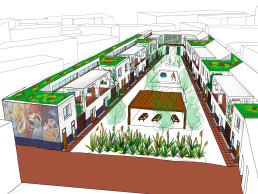
During my second year at university, I participated in a very meaningful project that made it possible for me to take part in this practice. The brief was to design a sustainable social housing scheme for a minority community of our choosing, in my case the Yoruba community, in the historically diverse neighbourhood of St. Paul’s, right at the centre of Bristol.
This project allowed us not only to comprehend more in-depth the intricacies of social housing, but to understand the importance of diversity in cities and accommodating the needs of a multicultural society. Throughout this project, our tutors made sure we would learn about the current housing situation in the United Kingdom, in partnership with a housing association, Stonewater, which both accompanied us through the process of designing this project as well as presented my cohort with this opportunity to work at BoonBrown, due to their relationship. In June, my project was shortlisted alongside seven others to be presented in competition at Stonewater’s office in Reading, with the winner receiving a paid internship with BoonBrown. I was very grateful to have been selected by the judges, including James Krikler, an Associate from the London studio, as well as members from Stonewater’s team and UWE Bristol.
I can only describe my two weeks at BoonBrown as a formative, enriching and overall enjoyable work experience, full of support, that made me look forward to my future as an architect and planner. This was in fact my first work experience related to my degree and therefore I did not know what to expect from it. Either way, I knew that I wanted to make the best out of this experience and looked forward to all I could learn from it. Throughout this time at the London studio, to my surprise, I got to work on three different projects, all of which allowed me to improve my skills, as well as to deepen my understanding of what true architectural work looks like. However, most importantly, it made me more confident to take on projects and to get on with work, which I most appreciate.
This next year at university, I am beginning my year abroad at the Politecnico di Milano, in Milan, Italy and I can see how many of the skills I acquired throughout this internship will be useful when both getting adjusted at this new university, as well as taking on the challenges that this new stage will present me with. BoonBrown helped me refine my technical skills in tools such as Revit, Autocad and Photoshop, showing me the importance of versatility and proficiency in a wide range of skills. It would allow me to tackle a diverse array of projects and do so both in the quickest yet most correct and accurate manner.
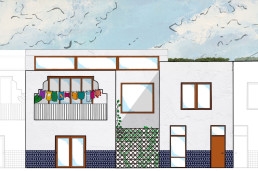
This takes me to my second and maybe the most important lesson from this experience, which was that of learning what true work with clients looks like. The first project I was introduced to by Technical Director Dan Dymond allowed me to interact with the intricacies of big housing projects, the way that properties need to be divided and how these boundaries are key when settling matters such as fixing fences or other affairs once the houses are inhabited. The second project, the renovation of former chicken sheds, introduced me to the demands of conforming to a budget, or at least accommodating for the cheapest ways in which one can deliver quality spaces and architecture; seeking the way in which we can best adjust to the demands of the client, while respecting the existing structure and its limits; and last but not least, dealing with deadlines and the type of drawings that may be introduced at the first discussions with clients. The third project allowed me to be introduced to a more coherent and cohesive way of presenting my future projects, experimenting with a mix of Autocad and Photoshop that helped me refine elevations and sections.
I would like to thank everyone at the office, especially Studio Director Abigail Baggley, James Krikler, Dan Dymond and Architectural Assistant Shanice Natalia for all the support, patience and confidence that they provided and invested in me throughout this work experience, as well as the rest of the team that took me on and made me feel part of BoonBrown from the first day.
It is very rewarding to know that I participated in true projects that will be built somewhere and that I got to learn so much in such a short amount of time. I now look forward to my third year in Milan and know that I have the skills to take on this challenge as well as future work experiences as an architect.
Thank you BoonBrown.
Written by

A ‘Year Out’ at BoonBrown
Placement
Written by


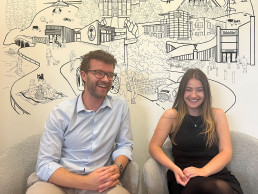
As September rolls around, once again, so does the time for university enrolment and for both Taras and Grace, this means saying ‘Goodbye’ to BoonBrown. After completing their ‘year out in practice’, they have decided to return to university full-time to pursue their Master of Architecture and Part II qualifications at Manchester School of Architecture and the University of Westminster respectively.
The ‘year out’ as it is known in the architectural field, is a period of 12-months spent by Part I qualified architecture undergraduates in professional practice. Although not compulsory, to complete immediately, post-university, it has many benefits: the student can get a taste of the realities of working on live projects in the industry, have a chance to apply what they have learnt during the preceding years at university, and most importantly, continue their learning.

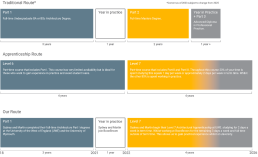
Previously, the path to qualification was quite prescriptive, with only the traditional route available. This comprised the year out in practice, followed by a master’s degree, a further year in professional practice, before then pursuing a Part III qualification via PGCert, completing a case study project, and then undertaking a professional interview. More recently, the apprenticeship route to qualification has been introduced, allowing students to be mentored in practice whilst attending university to obtain their Parts II and III. At BoonBrown, a number of our peers are currently pursuing this route, which you can read about here: https://boonbrown.com/architectural-apprenticeship-pathway/. The benefit is that with both options now available, the student now has the choice of which qualification pathway is best for them, and at this stage, Taras and Grace have decided that the traditional route is the right choice for them.
Taras’ Part I Experience at BoonBrown:
‘Joining BoonBrown as a Part I Architectural Assistant, I was worried I would spend the year creating door schedules and window details as many of my course mates had; I could not have been more wrong. From the outset, I was able to make meaningful contributions to projects; the office environment makes it conducive to ask questions, and I was never made to feel stupid for not knowing something. Coming from an arts degree background, my technical knowledge needed improvement, so to give me a platform to improve, the company held technical workshops and allowed me to work on working drawing packages alongside technicians. The practice also has in-house Town Planners and Landscape Architects, whom I was able to work with regularly and learn from – an opportunity not available at every practice.
All of these factors have made BoonBrown the perfect place for me to have spent my ‘year out’. Coming from university, I was convinced I wanted to work at a large-scale practice, however, on reflection, the medium-size of BoonBrown has really suited me. The practice is large enough that it has a varied portfolio of project types and scales, whilst being small enough that I have worked at almost all stages of the RIBA Plan of Work. This means that as a Part I, I have had a broad introduction to the industry, and through attending networking events and site visits, I gained experience in aspects of the industry that I otherwise would not have been exposed to at this stage in my career.
In my opinion, BoonBrown really benefits people with initiative who want to get the most out of their work, and for a Part I, I can look back on the past 18 months and see tangible evidence of how much I have progressed.’
Grace’s Part I Experience at BoonBrown:
‘After graduating from the University of Plymouth last academic year, with my Part I Architecture degree, I subsequently chose to pursue a Part I placement straight away. BoonBrown already being a practice I was somewhat familiar with, after completing work experience the previous summer. The prior exposure gave me a clear understanding of what could be expected, and the collaborative office environment fostered a productive and innovative working culture, where questions were encouraged and positively received, and ideas made, valued. I was fully immersed in projects from the beginning, from preparing design and planning applications, to technical design and handover.
BoonBrown’s commitment to personal development was evident throughout my year in practice. I engaged in internal technical and planning workshops, and was also able to attend a public consultation, which further advanced my understanding of the planning system and policies integral to the practice’s daily operations. This mixture of professions, including Landscape Architects, promoted a dynamic, multi-disciplinary approach to projects, enriching my learning and broadening my perspective on architectural practice.
My ‘year out’ has enabled me to become more confident in affirming that returning to university full-time is the right path for me, with a renewed sense of assurance across a wide range of areas and experience. Reflecting on my time at BoonBrown, I can see the progression that I have made, which I will ultimately be able to apply to my Masters of Architecture degree.’

A New Route into Architecture
Placement
Written by


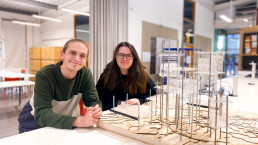
For many, embarking on the route to becoming an Architect seems like a lifetime. The traditional 7-year minimum path now includes an apprenticeship option, offering academic knowledge and practical application whilst earning a salary. Although this pathway is still a relatively new route to qualifying, it is becoming more and more popular within universities and architectural practices.
After completing our Part 1 placement year, it was apparent that the knowledge and skills you learn whilst being part of a practice surrounded by professionals is invaluable. The mentorship and guidance that we received within the year out exposed us to challenges and complexities in the industry allowing us to enhance our understanding of how theoretical knowledge translates into real-world applications. We were able to develop essential technical skills in areas such as design, software, construction techniques, project management and building regulations to gain a hands-on experience and a greater opportunity to embrace innovation for the betterment of the built environment.
When considering our next steps to qualify, we had to evaluate the options of studying full-time, part-time or on the new Level 7 Architectural Apprenticeship. The benefits of the apprenticeship route allowed for a more accessible and inclusive educational pathway, whilst still being accredited by professional bodies. Studying for 2 days a week, during term time, with the remainder of the year working full-time, we will be able to complete our Part II and Part III in 4 years. Although the timeframe doesn’t differ massively from studying full-time, completing a Part II placement year and finishing your Part III, it has the additional benefit of it being all included within 1 programme. Many people defer their Part III as they are tiresome of academia and become comfortable in their practice. However, the apprenticeship will keep us focused and ensure that we do not prolong the already extensive pathway.
95% of apprenticeship tuition fees are paid by the government with the remaining 5% paid by your workplace practice therefore no student loan is required.
Sydney’s Personal Experience:
‘When considering the routes to qualification as an Architect, I knew that returning to university full-time was not an option. Throughout my undergraduate degree, I had countless bad experiences living in halls accommodation, coronavirus and family emergencies where I was unable to get home. Living away from home, with the long commute, proved to be a real struggle and resulted in my mental health deteriorating. The apprenticeship route has allowed me to stay close to home, whilst earning a full-time salary, and continue my studies to becoming fully qualified. As a result, I have been able to maintain flexibility and financial independence which has allowed me to successfully buy my first home and embark on growing my family by getting a dog.’
As an apprentice, there are government standards that you must fulfil which include having a specific workplace mentor. This has allowed us to gain comprehensive training and support to ensure that our development covers all the RIBA work stages whilst offering valuable feedback and supporting us on our journey. Alongside having a workplace mentor, working closely with other experienced individuals in the office allows us to grow, both personally and professionally, to become more competent and confident. The government apprenticeship requirements also require us to log ‘Off the Job Hours’. These are hours that we have spent learning something new or developing a knowledge, skill or behaviour such as our university lectures, shadowing meetings or reading a relevant book. By recording these hours, it allows us to fully understand the standard that is required of us to be fully qualified and gives us a clear path towards the final gateway. With help from our workplace mentor, we can ensure that we record our development against the criteria to gain experience in all areas of architecture.
Despite all the benefits of the apprenticeship, the work ethic is incredibly demanding and is by no means easy or easier. Having to complete all of our university work, our ‘Off the Job Hours’ and PEDR’s, alongside general living and working full-time is definitely a struggle. With just the evenings and weekends, we have had to make many sacrifices to try and complete the work however this is something that we have not yet mastered.
The combination of working and studying pushes our time management to the limits where at university we are still expected to produce work within the same timescales and standard as a full-time student, without the additional time and days. This aspect of the course was something that we were totally unprepared for. Although we knew the workloads would be heavy from our undergraduate degree, the aspect of an apprenticeship made us think that the submissions would be altered due to us working full-time with the exception of timetabled university days, however this is not the case.
Martin’s Personal Experience:
‘Undertaking the apprenticeship means that you miss out on the typical ‘university experience’ as you have limited exposure to the university setting. However, this is not much of a sacrifice as I have already had this experience from my Part I degree at the University of Plymouth and feel as though the benefits of the apprenticeship outweigh the reduction in social opportunities.
Studying part time at university allows me to research and design using innovative and exciting advancements, whilst working in practice increases my knowledge on current technologies and regulations. Developing my knowledge and attitude towards learning will help me prepare for my future in Architecture.’
After experiencing our first year of the apprenticeship, we often ask ourselves if this is something we would do again and whether we made the right choice. If there were no variables to consider, and it was between full-time education and the apprenticeship, full-time would be preferred as the educational pathway allows you time and space to fully delve and explore the creative briefs. However, taking into consideration all of the above benefits including a full-time salary, being close to home and family, no student loan and the amount of valuable work experience, the apprenticeship is definitely a great choice as it offers a well-rounded and practical approach to learning and qualification, preparing us for a fulfilling career in architecture.
Routes to Qualification